


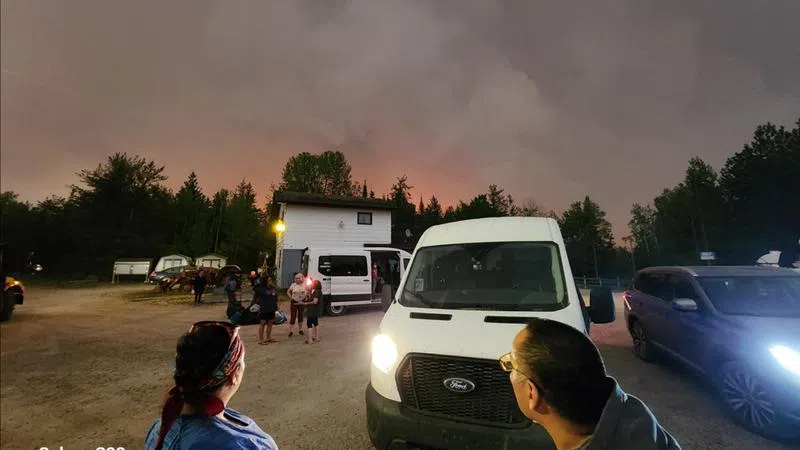
Saskatchewan is facing one of the worst wildfire seasons in decades, and the Saskatchewan Public Safety Agency (SPSA) says the majority of these fires are human-caused. As of Wednesday, nearly 20 wildfires were actively burning across the province, with several already forcing evacuations and prompting urgent alerts.
🔥 Weyakwin Evacuated After Confusing Alert
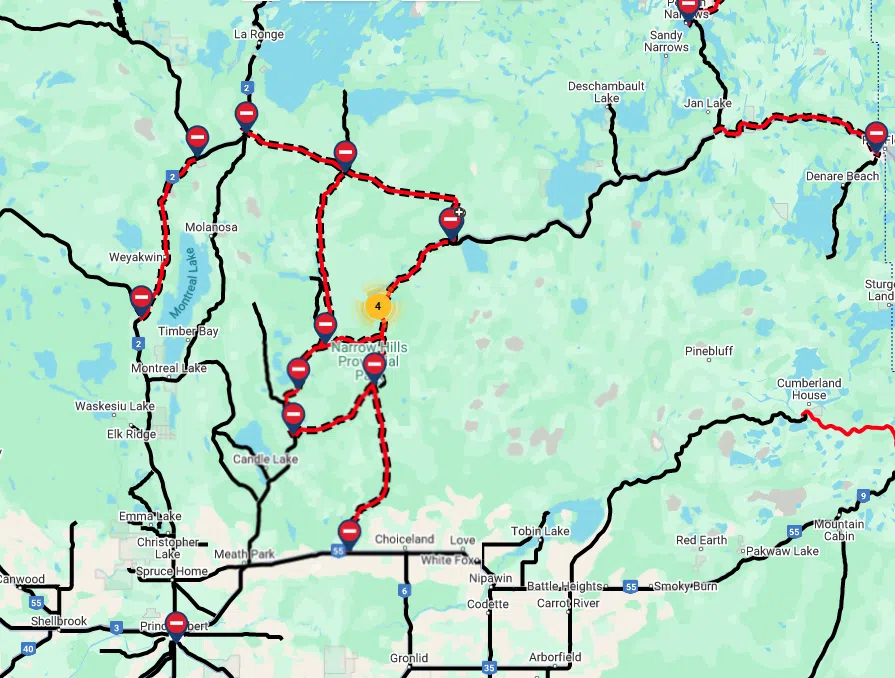
On Wednesday evening, a SaskAlert was issued stating that the northern hamlet of Weyakwin was being evacuated due to an aggressive blaze known as the Ditch02 Fire. The fire, which ignited along Highway 2 on May 25, is believed to be human-caused and is rapidly approaching the community — about 150 kilometres north of Prince Albert.
However, the alert initially caused confusion as the SaskAlert app mistakenly highlighted the City of Prince Albert as the affected area. Roughly 30 minutes later, SPSA issued a correction clarifying that Weyakwin was indeed the community under immediate threat.
🧳 Mass Evacuations Underway
Weyakwin is just one of many communities impacted by this fast-evolving wildfire situation. More than 5,500 people have been or are expected to be evacuated from several northern Saskatchewan communities, including:
-
Pelican Narrows
-
Denare Beach
-
Hall Lake
-
Southend
-
Montreal Lake
In response, the Lac La Ronge Indian Band, Peter Ballantyne Cree Nation, and Montreal Lake Cree Nation have declared a joint state of emergency. Leadership from all three nations expressed deep concern over critical shortages in firefighting resources, personnel, and air support in a statement released to media.
🚨 East Trout Lake Sees Substantial Loss
Further south, two large wildfires in the Narrow Hills Provincial Park region — the Camp Fire and the Shoe Fire — have now merged into the largest fire in the province. This uncontained mega-fire has already prompted an evacuation order for the Resort Subdivision of East Trout Lake, which has also declared a state of emergency.
The Saskatchewan Public Safety Agency confirmed the community has suffered “substantial loss”, though exact details are still emerging. East Trout Lake is located roughly 160 kilometres southeast of La Ronge.
🧭 Advice From Someone Who’s Been There
Kara Stene-Link, a former Saskatchewan resident who now lives in Alberta, knows the fear and urgency all too well. She and her family had to evacuate during the 2023 fire season—and her advice is both practical and heartfelt:
“Save as much as you can—definitely important documents and passports. Bring your animals if you can. If you can’t, pray they’ll be ok.
If you have large animals like cattle or horses, mark them with paint or a permanent marker and open the gates. That’s their best chance to survive.
Pack at least 72 hours of food and water. Don’t forget prescriptions.
In my rush, I once packed a full case of Kraft Dinner. Looking back, I laugh—but at the time it felt like the right thing to take.
Please all be safe—and know your neighbors are praying so hard for rain.”
🔥 Candle Lake on High Alert
While the Shoe Fire remains about 20 kilometres from Candle Lake, its massive size — estimated at 220,000 hectares — and vulnerability to shifting wind conditions have pushed local officials to act quickly.
On Wednesday afternoon, a pre-evacuation alert was issued for:
-
Aspen Ridge
-
Cranberry Creek
-
Torch Light RV Park
-
Surrounding rural properties
In addition, the Resort Village of Candle Lake issued a voluntary evacuation request, especially urging seniors, families with children, and those who are medically vulnerable to consider leaving the area early.
A statement on social media advised:
“Please do not come to the lake to stay or vacation. However, if you need to briefly enter to inspect your property or remove belongings, you may still do so, but you should depart immediately thereafter.”
📝 Be Prepared: Register Ahead of Time
To help streamline emergency response and family reunification, Saskatchewan residents are strongly encouraged to pre-register using the Sask Evacuation Check-In App:
🔗 https://app.saskecs.ca



Comments