


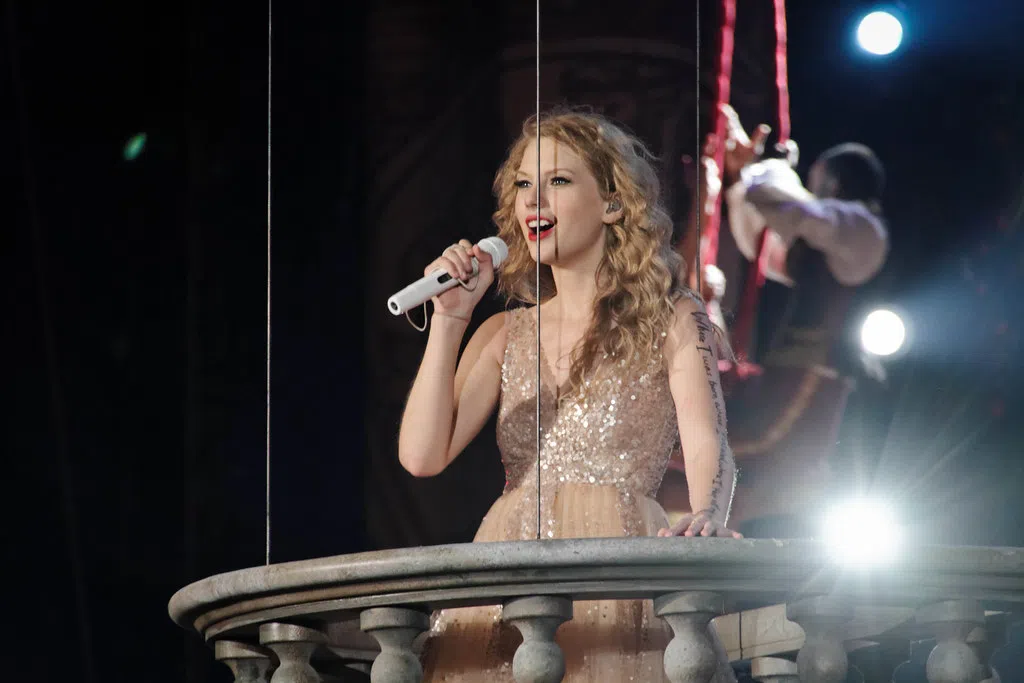
The pop star is currently the most listened-to artist on the planet thanks to her legion of devoted superfans.
A group of Taylor Swift fans camped for five months outside a venue to get the best seats at her show.
Swift has rarely performed in Latin America, and this is her first-ever appearance in Argentina. Owen says tents were put up when it was just speculation about a possible show. South American Swifties aren’t the only ones who camp out to see Taylor Swift, US fans do the same thing for Harry Styles and Dua Lipa, and there are plenty of parallels drawn between Swift and the bearded musicians’ cult followings.
Owen, 21, had camped outside the city’s Estadio Mâs Monumental since June to get the best view for Taylor Swift’s Eras tour. The stadium has general admission seating, meaning you don’t get a designated spot with your ticket.
@jasminewhitehead Camoing for ticketd is wild i feel like im in the olden days HAHA #fyp #foryoupage #camping #concert #taylorswift #taylorsversion #1989taylorsversion #theerastourtaylorswift #theerastoursydney #theerastouraustralia #ticketek #swiftie #liningup #concerttickets ♬ use this audio if josh hutcherson is dazeys man - swb 🪩💕
But what’s behind Taylor Swift’s mass appeal?
Dr Gayle Stever, a professor of psychology at Empire State College, credits Taylor Swift’s talent, physical attractiveness and hero or role model qualities.
For Swift fan Laura, who is 33 and from Somerset, it’s down to her being the same age and generation as the pop star. She says Swift’s capacity to constantly reinvent herself is something that fans can feel inspired by. Laura feels that Swift’s lyrics tackle a range of emotions and experiences, and her persona is both stately and goofy, which makes her both a good model and somewhat relatable.
Taylor Swift’s fandom is a hegemonic monoculture, with inside jokes, rituals, and lore that one might find in an alternative subculture. The unique thing that sets Swifties apart from other fandoms is the endless hunt for ‘easter eggs’.
Taylor Swift’s celebrity persona and her cross-generational appeal are strong because of her vocal advocacy of sexism, sexual double standards and gender inequality. However, as her celebrity has grown exponentially, this type of behaviour isn’t sustainable long term. Some fans are questioning the toxicity of fan culture, they say this type of idol-worshipping is excessive, and trivializes the experience of homeless people. Some fans describe feeling disgruntled about being unable to be a casual Taylor Swift fan, and others describe feeling like they don’t see their fan credentials as ‘valid’ enough to buy an Eras tour ticket.



Comments